Click image for more images in each series
"The universe is not a collection of objects, but a constant flow of aspects." — Inspired by quantum physicist David Bohm
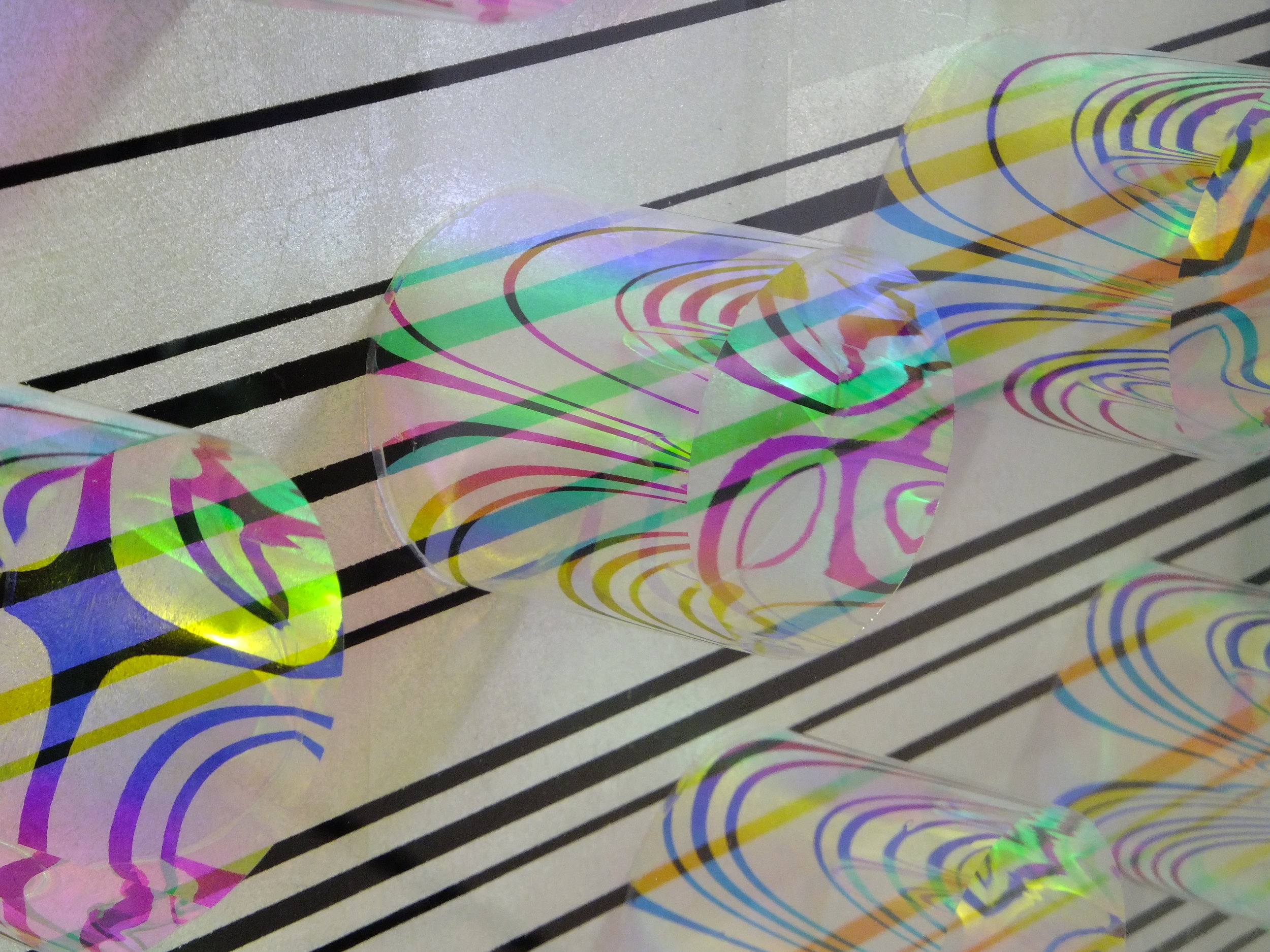
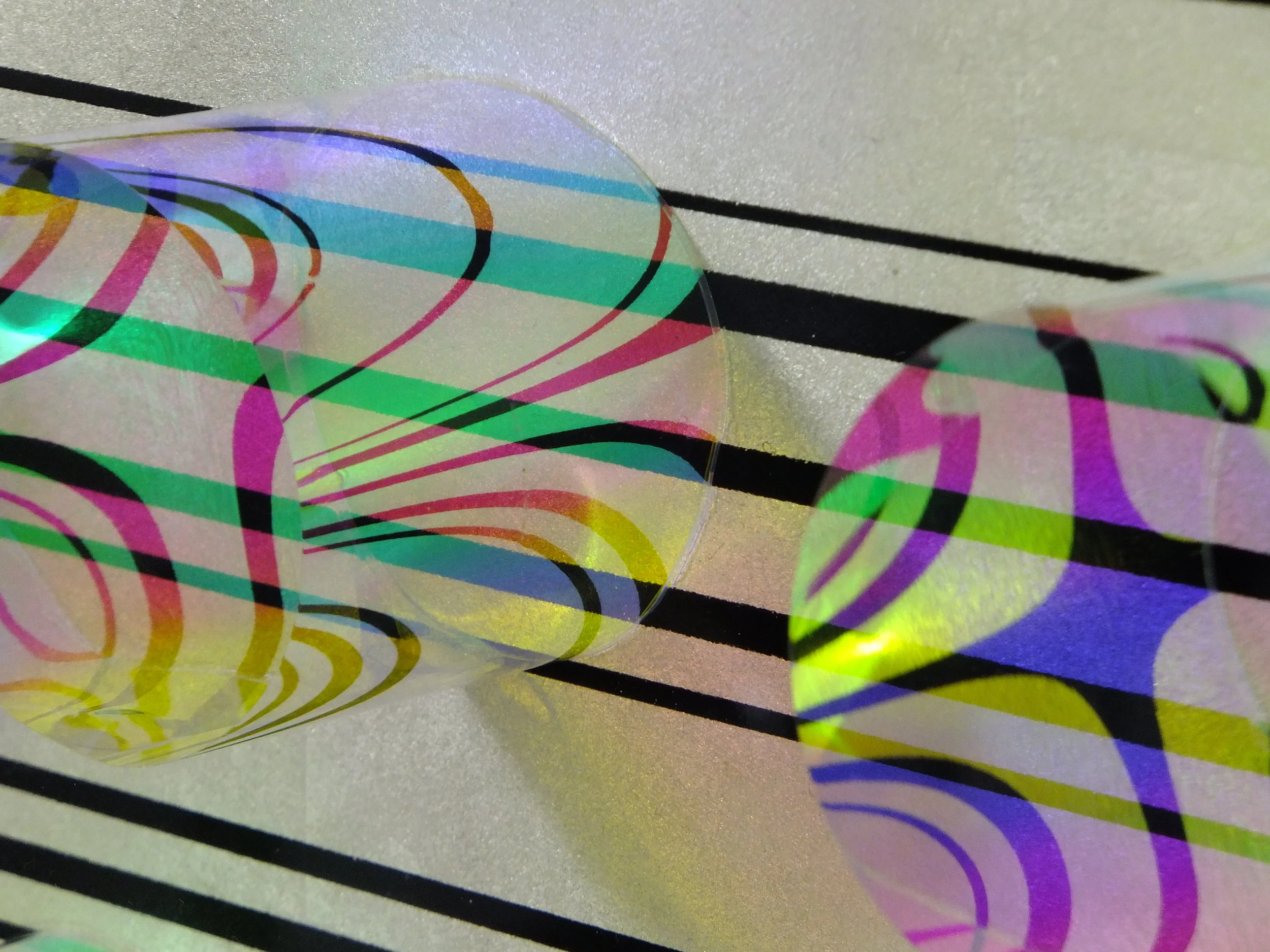
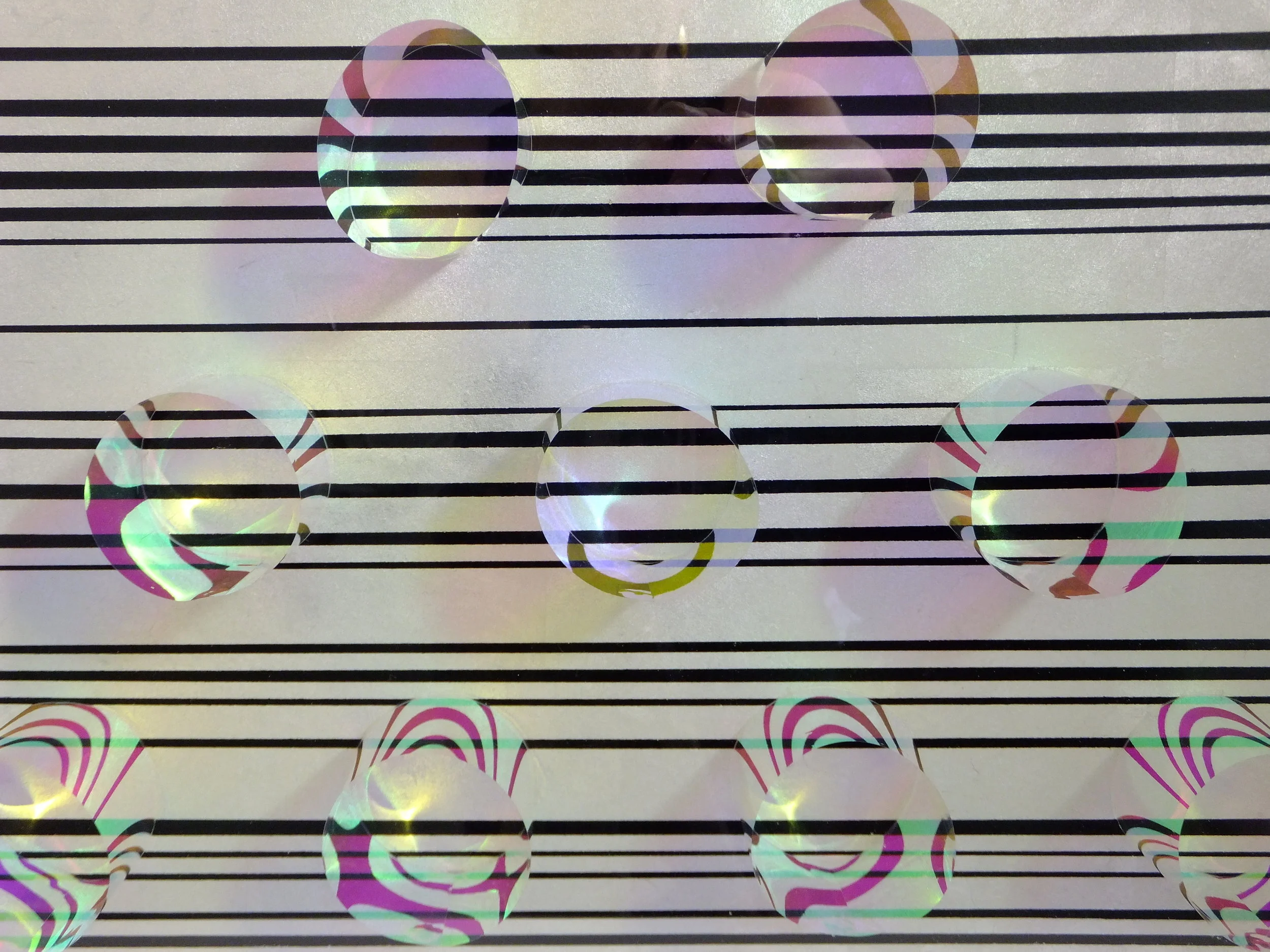
In the Quantum Questions—Line Interrupted series, Peta Jacobs creates a "living" geometry where forms morph and lines interrupt one another. Inspired by physicist David Bohm, the work explores the dynamic intra-relationship of particle and wave and the boundary where the seen and the unseen meet. These works are a visual meditation on Bohm’s theory of the Holomovement, where the totality of existence is enfolded within every fragment of space.
As in other series, colour is an event, not a material. What begins as a stark, black-and-white study of geometric lines transforms into a vibrant, shifting spectrum as the viewer changes position. Peta creates a dynamic geometry where forms morph and lines interrupt one another.
Peta's artworks are kinetic and do not sit in static silence, and, like the quantum world they reference, they require an observer to 'become'. The viewer’s perspective dictates the reality of the work. From the front, you witness what Bohm termed the Explicate Order: a structured, monochromatic reality of ink and line fractured only by the subtle arc of transparent film. But as you move, you see the lines morph and the colours oscillate, an Implicate Order unfolds. Through the polarization of light, colour is birthed from transparency—mimicking the way matter emerges from the wave-function.
Mirrors integrated into the frame serve as a gateway, reminding us that the "boundary" of the frame is an illusion—the boundaries vanish, inviting the viewer into a visual representation of the infinite, interconnected "Wholeness" of the quantum level. The dance of particle and wave extends infinitely, a seamless wholeness in which we are not merely spectators, but active participants.
Peta's work draws inspiration from quantum paradoxes, specifically the dualistic nature of particles and antiparticles. Utilizing lenticular photography, she creates an interactive experience where the image transforms based on the viewer’s position.
Visually echoing the relationship of matter and antimatter, colours shift into their chromatic opposites: black to white, red to green, and purple to yellow. These image and anti-image layers are intricately meshed, creating a perceptual flux that mirrors the shifting certainties of the quantum world. The viewer navigate a space where two states coexist, shifting between each as the viewing angle changes.
This series is inspired by the work of quantum physicist, David Bohm. This piece references his theories of the holomovement—the dance of matter between the enfolded implicate order and the manifest unfolded explicate order.
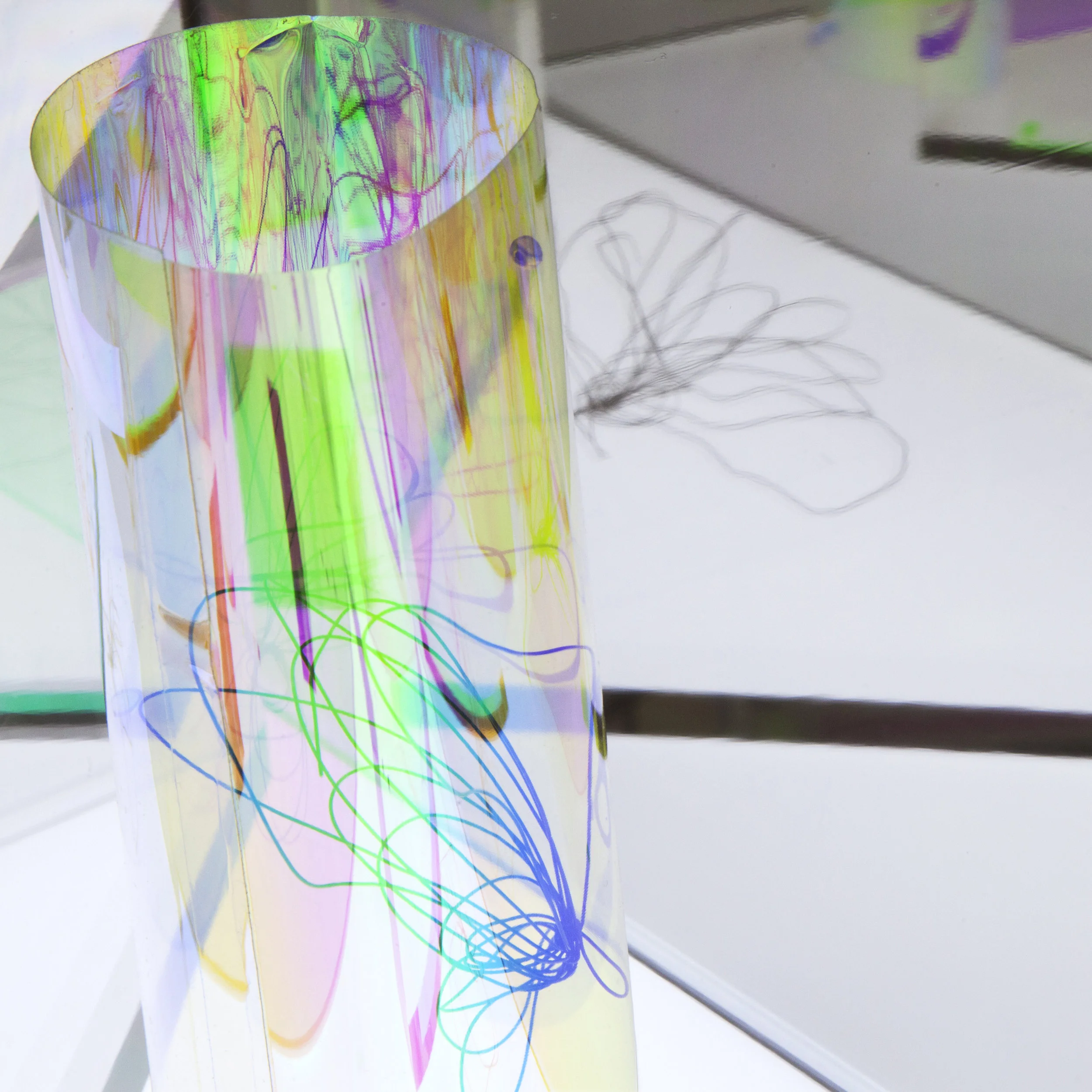
These photographs capture the dance of sunlight through dichroic film.
In Zen, the ensō, a hand drawn circle, symbolises enlightenment, strength, elegance, the universe, and mu (the void).
Here, the circle is formed by sunlight shining through the dichroic film and the shapes and colours are drawn with light.
This is a pleated black and white laser print, however, soft colours are seen. They are created by diffraction of light shining through from the LED panel behind.
Ghost-like secondary images of the 'particles' lift off the printed surface to apparently overlay each other in subtle, soft hues of blues and oranges creating patterns that shift as the viewer moves position. These colours and patterns are made by the nature of light itself.
Mirrors suggest that the work extends beyond its own boundaries towards infinity.
Inspired by physicist David Bohm who posed that, at the quantum level, matter unfolds from an implicate order, becoming the explicate world we experience.
What viewers see shifts when they change their position. The visual shifts are most noticeable at the edges of the forms and it is not possible to determine exactly where the margin lies. This is inspired by a theme of indeterminate boundaries which is drawn from quantum physics.
This work also represents the paradox of unity from multiplicity. Close up, one sees all the separate dots and loses the gestalt of the whole, however, at a certain distance the image appears to unify.
A photographic investigation into the material properties of light, diffraction grating and dichroic film reveals unusually coloured reflections and shadows.
Diffraction grating and dichroidc materials are usually found in physics laboratories.
The works in this series promote multiple viewpoints, questioning the veracity of a fixed viewpoint. The truth of what one sees in these pieces shifts dependent on viewing position. The works are playful and 'tricky,' making use of a variety of optical effects, some of which are outside a person's ordinary visual experience.
Indeterminate Interface. In response to contemplating the interface between the crease between no-form and form, between an object and it's environment based on aspects of quantum uncertainty and indeterminacy (Heisenberg, 1927; Prigogine, 1997).
In these artworks, the boundary of each piece is questioned, asking exactly where the interface between the object and the environment exists. A definite frame is created by the hard edge of the printed acrylic media, mimicking a traditional picture frame. Simultaneously, the reflected coloured light extends beyond this outline, reaching out and blending with the light from the neighbouring piece, the intensity diminishing gradually and fading into the background as it extends from the block.
The interface is both an edge and a zone at the same time—the pieces are simultaneously, both contained and not contained,
Here, I use a variety of materials, wire, beads, coin, and buttons to represent both particles, waves and quantum weirdness. These are overlaid by folds of diffraction grating (a material usually used for spectral analysis) distorting the forms with a series of coloured penumbras.
These coloured virtual 'shadows' create indeterminate, multiplied boundaries and edges. Solidity is questioned and there is a tension between density of the 'hole' and the ephemeral filigree strands.
Being set within a mirrored space creates visual relationships that change depending on viewer's position that reflect and unfold towards infinity. In a spirit of bridging duality and juxtaposition of opposites, there is a tension between the ephemeral, otherworldly quality seen from the top view and the surprising ordinariness revealed by looking at the objects from the side view.
A material exploration of diffraction grating resulted in several series of photographs revealing (amongst other things) the spectrum-hued beauty enfolded and hidden inside white light.
In these photographs shafts of white light emerge from the blackness. They are difused and reflected in the diffraction grating where the white light unfolds and springs into myiad arcing colours.